Our Story
Casa Alterna began as a way of living shaped by family, friendship, grief, and a steady choice to stay close to people who are often kept at a distance. What began in one home grew through shared life with neighbors, migrants, and friends. Over time, it became a network of homes and practices rooted in hospitality, accompaniment, and solidarity.
At the center of this story are three lasting commitments:
Kinship that keeps expanding
Casa Alterna began with family and close friendship, and it has continued by widening the circle of who is held as kin. From adopting a child from Guatemala, to sharing life with neighbors in crisis, to walking with families at detention centers and asylum seekers arriving without support, the movement has always been outward.
People who are often treated as “other” are brought into the space of family—not as an idea, but through daily life, shared homes, and mutual care.
Hospitality as a form of resistance
Hospitality is at the heart of Casa Alterna, but it is never just kindness. It responds to systems that separate, detain, and exclude.
Opening homes, offering refuge to families of detained people, and accompanying asylum seekers at ICE check-ins are not symbolic acts. They are real choices to resist abandonment. In this way, hospitality becomes a form of nonviolent resistance grounded in dignity, presence, and care.
Faith lived in place
Casa Alterna is shaped by deep moral and spiritual conviction, but it is not mainly expressed in ideas. It is lived in real places: kitchens and living rooms, detention centers and courthouse lines, meetinghouses and neighborhoods.
It is sustained through presence, not distance—by staying when it would be easier to leave, and by showing up again and again in the same places of need and relationship.
Love Crosses Borders
Across all of this, one conviction holds: Love crosses borders.
Borders of nationality, language, and belonging are real, but they are not the final word. Casa Alterna exists in the practice of crossing them—again and again—through kinship, hospitality, and faithful presence.
-
2000

Family Becoming Wider
Anton and Charlotte Flores adopt Jairo, a two-year-old from Guatemala. Their family life becomes deeply connected to Guatemala and to immigrant communities in the United States. This shapes a lifelong commitment to cross-border belonging.
-
2001

Friendship Becoming Kinship
Through a Spanish-language church in LaGrange, Georgia, Anton and Charlotte meet Arturo and Norma Martinez. Friendship grows slowly through worship, shared meals, and daily life. Over time, it becomes a kind of chosen family.
-
2002

When Housing Became Solidarity
Norma, who is without legal status or health insurance, becomes seriously ill with kidney disease and needs stable housing. Anton and Charlotte buy a second home so Arturo and Norma can live with dignity and stability. They choose not to treat it as a source of profit. Instead, they share ownership over time. Housing becomes an act of solidarity, and solidarity becomes a way of life.
-
2006
A Leap Toward Community Life
Anton leaves a tenure-track academic job to focus on immigrant justice, hospitality, and shared community life. From this point, Alterna begins to take shape—not as an institution, but as a way of living among friends and neighbors committed to one another.
-
2007
Presence at the Gates
After a hunger strike at Stewart Detention Center, Alterna joins Koinonia Farm and School for Conversion to hold the first vigil outside the private prison. Standing outside becomes a form of prayer. Alterna also becomes a founding member of Georgia Detention Watch, with Anton on its steering committee.
-
2008
Accompaniment Takes Shape
In partnership with Georgia Detention Watch, Alterna organizes visits to Stewart Detention Center. These visits become a steady practice of showing up for detained people and their families during separation and uncertainty.
-
2009

A Wider Witness
The annual vigil to “Shut Down Stewart” grows into a larger public witness connected to national efforts against ICE detention. What began as small gatherings expands into a sustained movement of solidarity.
-
2010

Hospitality Takes Form
Alterna helps start El Refugio, a hospitality house for families visiting people detained at Stewart Detention Center. It becomes a place of rest and care in the middle of grief, where people are welcomed without condition.
-
2012
Love That Multiplies
After visiting Alterna, Sarah Jackson returns to Colorado and starts Casa de Paz near the Aurora Processing Center. The work spreads as others carry it into new places.
-
2015

Community at Its Height
The Alterna Community, founded by the Flores and Martinez families, grows to nine households living near one another. Life is shared through cooperative housing, faith, and daily community.
-
2016
Grief and Unraveling
The deaths of Norma Martinez and Anton and Charlotte’s son, Eli, deeply affect the community. Grief becomes shared and overwhelming, disrupting the life that had formed before. What remains is a wound held open, waiting for healing.
-
2017

What Remains
From that breaking, Casa Alterna emerges in a smaller form in a Latinx immigrant neighborhood. Life continues through tutoring, shared meals, food distribution, and daily care.
-
2019
Returning to Atlanta
Anton and Charlotte return to Atlanta, where they first met. Anton becomes Friend-in-Residence at Atlanta Friends Meeting, continuing work in Quaker community life and hospitality.
-
2020

A New Virus, A Renewed Hospitality
During the COVID-19 pandemic, the meetinghouse becomes a place of refuge for asylum seekers and families facing deportation. Even in isolation, accompaniment continues in new ways.
-
2022
Transitional Hospitality
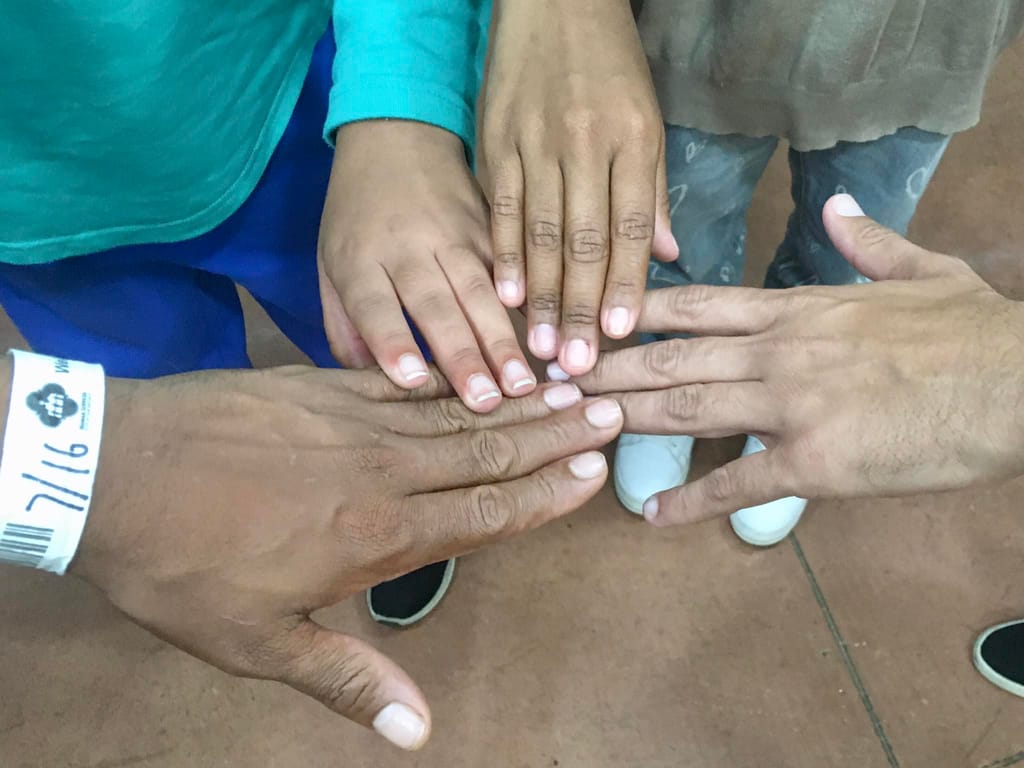
As Venezuelan asylum seekers arrive in large numbers, Casa Alterna opens a transitional home through Atlanta Mennonite Church. People begin arriving before the house is fully prepared. The home becomes a place of urgent and imperfect welcome.
-
2025
At the Gates of ICE
Casa Alterna begins accompaniment outside Atlanta’s ICE field office, offering legal information, referrals, and compassionate presence. In moments of fear and uncertainty, simply being present becomes an act of solidarity.
-
The Thread That Holds
Across all these years, one pattern remains: love becomes real through place, presence, and practice. Casa Alterna is not a project that was finished once, but something lived every day—one encounter, one home, one act of accompaniment at a time.
Love crosses borders.
