
Each week, Casa Alterna volunteers gather outside the Atlanta ICE Field Office before dawn. We offer teddy bears for children, Know-Your-Rights information, and a ministry of presence to immigrants reporting for check-ins—some fearing detention, while others hope compliance brings mercy. What follows is a reflection from one such morning, where heartbreak and hope walked hand in hand.
Two Families, Two Fates
It is heartbreaking every time we see vulnerable immigrants enter the ICE field office and not return. We always hope it doesn’t mean they’ve been detained, but recently, I fear two men were ensnared by ICE.
The first was a Vietnamese father who had faithfully reported to ICE for years. He arrived knowing he had a removal order and, as he told me, a decades-old criminal conviction. With no pending legal relief, he still came—accompanied by his two U.S.-born sons, who were visibly worried.
The father seemed weary and detached, sometimes irritated as his sons translated my explanations about ICE’s current practices. They arrived at 8 a.m., and by the time I left at 11:30, he was still inside. I can only pray he returned home to his family.
Later that morning, another heartbreak unfolded. A Venezuelan woman emerged from the ICE building in tears, clutching her husband’s jewelry—including his wedding ring. “They’re taking him downstairs,” she said, referring to the detention processing area, before breaking down.
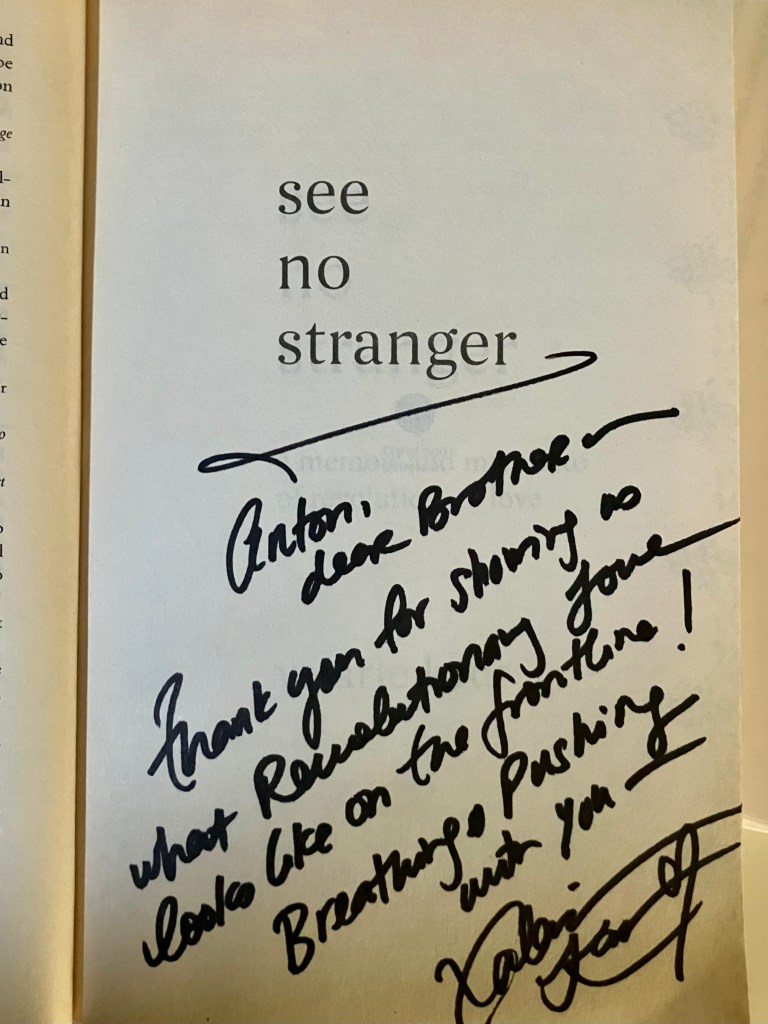
I embraced her, remembering Valarie Kaur’s reminder that grieving with those who suffer unjustly—even if we do not know them—is a revolutionary act. She asked if they were going to take him away. I told her gently that we could hope for the best but must also prepare for the worst.
Her husband’s only infractions were a minor traffic violation and driving without a license—both long resolved. He now has a pending asylum case, a work permit, and a valid driver’s license. Could such a simple moving violation truly place someone at heightened risk of detention? Only weeks ago, I would have said no. I fear that’s no longer true.
Cruelty and Its Inconsistency
I gave the distraught wife my contact information and a link to a trusted immigration attorney database. I also told her that if her husband were deported and she was left without support, Casa Alterna could possibly help with transitional housing. Then, two strangers—bound by suffering and hope—embraced again.
Later that day, we met another man who had spent 25 days in detention for driving without a license. Once his Temporary Protected Status was confirmed, ICE released him and even closed his case that same day. Still, he was visibly shaken recounting his unwarranted and cruel detention.
Since that shift, I can’t shake the thought that perhaps cruelty’s most insidious form is its inconsistency. When anyone can be detained—immigrant or citizen alike—and when no clear protocols or priorities exist, hope easily crumbles under the weight of fear.
Even amid heartbreak, hope keeps showing up.
Hope in Small Acts of Love
And yet, even amid heartbreak, hope keeps showing up.
On that dark, early morning, I saw it in the Emory students handing out homemade arepas and children’s books. I saw it in the calm, pastoral presence of an ordained minister volunteering with us, and in the steady compassion of another volunteer checking court statuses and consulting thoughtfully about each concern.
I saw it in the Senegalese man—himself in removal proceedings—helping another Francophone neighbor learn how to replace a lost work permit.
And I saw it in the couple who stopped to bless us as they left their ICE check-in, expressing gratitude that we—a group of strangers—would even care, much less show up.
Revolutionary Love
Hate and criminalization have become normalized in our society. White nationalism and xenophobia often hide behind uniforms, regulations, and bureaucracy.
And yet, at the gates of ICE, I also witness the opposite. I see what Kaur calls “a revolutionary love” rising from the margins—a love that refuses despair and chooses humanity at every opportunity. I see it in volunteers, in strangers, and in the small but profound gestures of care we offer to those in crisis and to one another.
This work can take something out of us if we let it. Yet I hold on to a stubborn hope and keep choosing love.
In a world that too often rewards cruelty and fear, every act of compassion is a form of resistance.
In a world that too often rewards cruelty and fear, every act of compassion is a form of resistance. At the gates of ICE, love and hope are not sentimental. They are revolutionary.
written by Anton Flores-Maisonet
At the Threshold
What would happen if more of us showed up to the places where cruelty hides behind policy—not with protest signs alone, but with presence, tenderness, and revolutionary love?

 Casa Alterna
Dearest Anton…..am ever more deeply moved by your incredibly deep, painful, joy-full, hope-full, tragic…all of this…stories of the incredible work you all do, day by day. Sending gratitude beyond all words…and a check coming….went to write my monthly checks, and realized I had no more!! (checks!) so had to order a new batch!! Hopefully, they will be at the Post Office in Bear Creek when I pick up mail on Monday!!! (At daughter Joyce’s now!) Boundless gratitude, prayers, loving support to you all…who are walking the walk…of love, of peace, of justice….humbly grateful…always, Jean
LikeLike