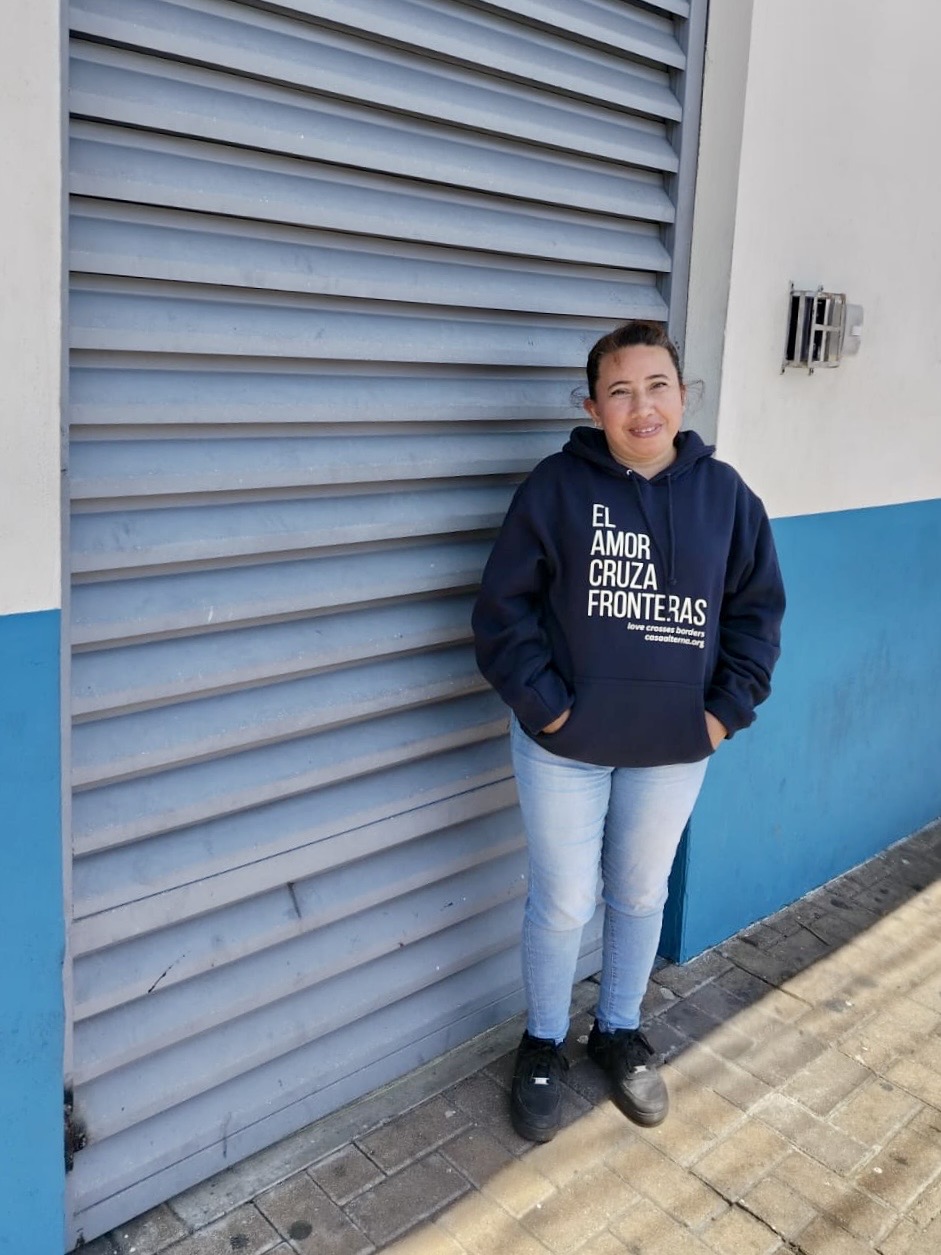
A man stood outside the military airstrip in Guatemala City, waiting for a loved one being forcibly deported. When Jacky offered water and a few words of comfort, he said, “Es grato encontrar a alguien ofreciendo palabras de aliento.” It’s good to find someone offering words of encouragement.
Jacky responded simply:
I remember when I was in their shoes.”
It’s a familiar phrase, but a poignant one here. The people stepping off those planes do so clumsily, their shoelaces removed by the U.S. government for “security reasons.” Person after person steps out in shoes without laces—another small indignity in a much larger unraveling.
Jacky Medrano remembers because, more than a decade ago, she was one of them.
My story with her goes back over 15 years. She remembers meeting me at a Three Kings celebration Casa Alterna used to host in LaGrange, Georgia. I remember first meeting her in a very different place—our local jail. She was pregnant, facing an uncertain future. When it became clear she would give birth while confined, she asked something extraordinary of Charlotte and me, though we were not yet friends: would we care for her newborn child until she was deported, and then reunite mother and child?
We said yes.
Emmanuel—Manny—came to live in our home for over a year. Charlotte would feed him in the mornings before work. I would get him dressed, and we would have our ritual—a small dance before heading out in a stroller to daycare. Fourteen years later, we still dance together to Vivir Mi Vida.
Voy a vivir el momento. I’m going to live the moment.
When Jacky’s deportation became imminent, we brought Manny to Guatemala to reunite with his family—grandparents, siblings, aunts, uncles, cousins—all gathered in one home. In that season, what began as fostering became something else: the birth of an extended family.
Today, 14 years later, Jacky is Casa Alterna’s first international employee.
Hiring her has not been simple. We’ve figured out basic logistics like cross-border payments, but we are still working on something as simple as a credit card to support her fieldwork. Beneath the complexity, something is clear: this is a step toward restoration.
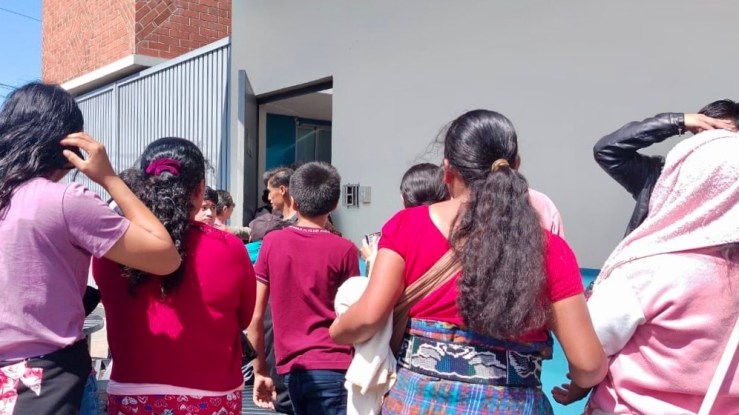
Jacky now stands outside that same airstrip, accompanying families as they wait—sometimes for hours, sometimes for days—unsure when or if their loved one will arrive. Many arrive already carrying heavy debt. One young man returned still owing more than $1,300 on a high-interest loan his family took out—using their home as collateral—to fund his migration years earlier. For a Guatemalan family, $1,300 can take months to earn and years to repay. Recently, Jacky recounted a family of fifteen arriving in a van from hours away; each night, while awaiting their loved one, adults and children slept inside the vehicle on the streets of Guatemala City.
Into this, Jacky shows up.
She brings bottled water and snacks, sometimes homemade, and something harder to name but essential: presence. She greets families outside the gates. She listens. She helps them check ICE’s detainee locator system to confirm whether someone is on the way.
Hospitality here is not a program. It is the refusal to let families wait in shame as they carry confusion, debt, and the weight of systems not of their making.
And this work is led by someone who has lived it.
It matters that Jacky is doing this work because she has been in those shoes without laces. Manny and his siblings—now teenagers and young adults—are beginning to join this effort as well. What was once a wound is becoming, slowly, a source of healing for the whole family.
We do not yet know what this will become. It is still fragile, still unfolding, still built on the courage of one person showing up day after day.
But something is coming full circle. The relationships that have always been at the heart of this work are shaping its future in new ways.
Imagine if even one person in every place where deportation planes arrive chose to show up this way, hospitality might begin to look like a quiet revolution.
If we do not risk radical welcome, we may never fully know how human our lives are meant to be.
written by Anton Flores-Maisonet
photos provided by Jacky Medrano

 Casa Alterna