Bearing Witness in Guatemala
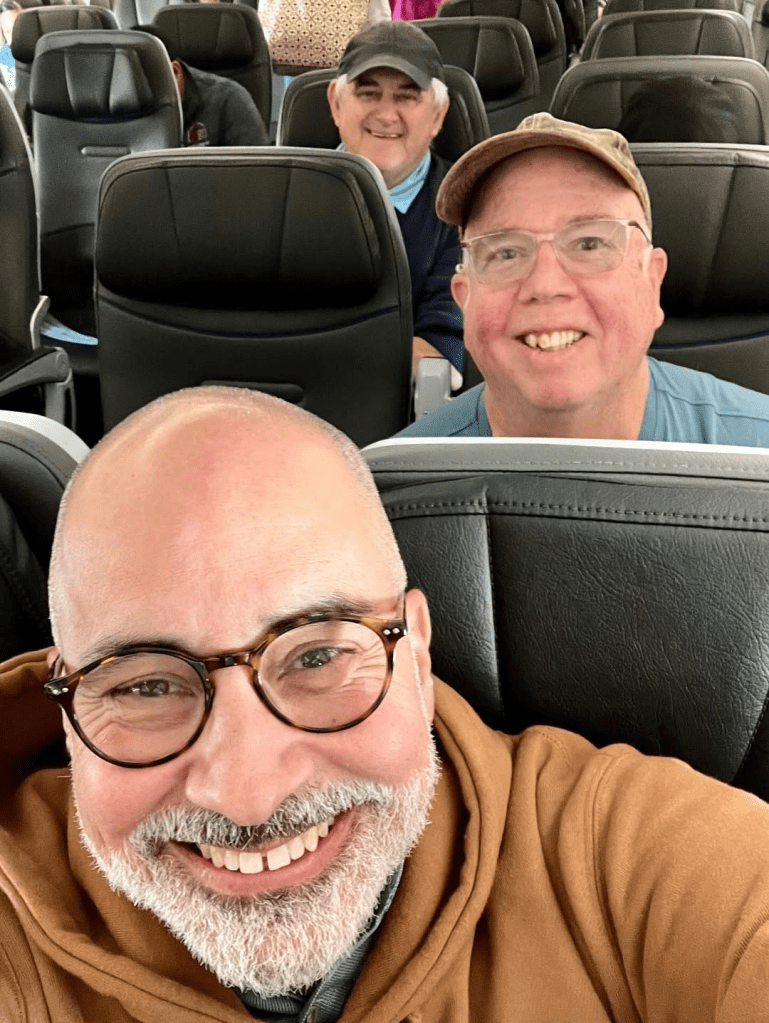
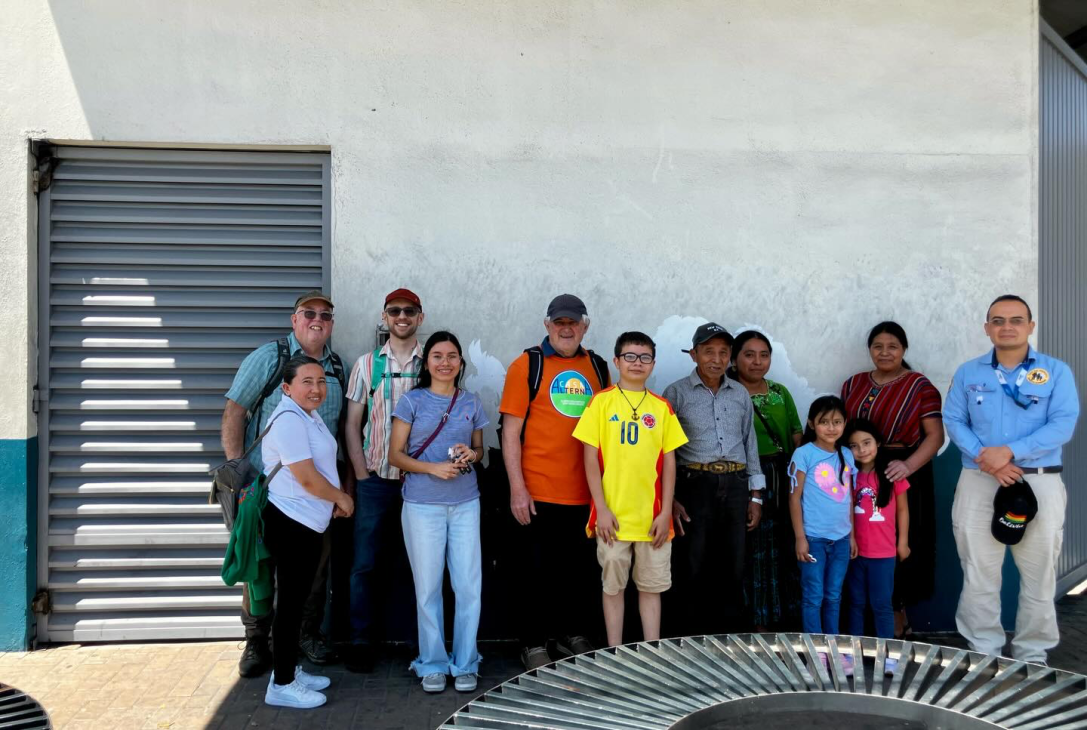
Earlier this month, Anton, Alberto, Barrett, and Mike traveled to Guatemala to witness how love crosses borders. This was more than a trip; it was a pilgrimage—to listen, to learn, and to stand in solidarity with families whose lives are shaped by displacement, deportation, and steadfast resistance.
What we experienced is not a broken system but a system functioning as intended—one that separates families while relying on their perseverance to absorb the cost. Over several days, we met mixed-status families, held vigil with Guatemalans outside the military airstrip where deportation flights arrive, visited migrant shelters, and received the hospitality of Indigenous communities who continue to live with dignity despite generations of colonization and violence.
Arrival and Welcome: Lucy’s Story
Our journey began at the international airport in Guatemala City, where we were greeted by Lucy*, a Guatemalan mother of three U.S.-citizen children. Lucy had lived in the United States for 13 years before being detained and deported. While incarcerated, she gave birth to a child and was separated from him for the first 15 months of his life. More than a decade later, the trauma remains, yet Lucy continues to show love, acceptance, and welcome while also longing to return to the States someday.
She invited us into her home and shared the warmth of her family. Her extended family offered their bedrooms, shared their food, and created a space where visitors and hosts became one family. Through their hospitality, we witnessed the remarkable capacity for human care.
Vigil at the Landing Strip
The next morning, we traveled with Lucy and two of her children to the Guatemalan Air Force landing strip, where those deported—referred to as “returned” in Guatemala—arrive from the United States. Though we could not enter the terminal, we met families waiting outside the gate, anxious for loved ones and often unsure when—or if—they would arrive. The uncertainty was palpable: ICE provides little to no information, citing homeland security concerns.
We met families returning day after day from faraway regions, carrying both hope and worry. We offered water and snacks, listened, and played simple games with children—small gestures that built connection. As U.S. citizens, we also expressed remorse for our nation’s cruelty and indifference. Amid joy and fear, laughter and tears, we shared in the bittersweet reality of reunions shaped by forced separation.
The Human Cost
From the airport, we visited the Casa del Migrante. Run by the Scalabrinian Missionaries, it is part of a network of shelters across the region that accompany migrants, refugees, and deported individuals by offering not only food and lodging, but also spiritual care, basic medical support, and advocacy for human dignity and rights.
At the shelter, we met a South American mother whose family had hoped to reach the United States but was blocked at the border by restrictive policies. We also met a Caribbean man who had lived most of his life in the U.S. but was detained after years of complying with ICE check-ins. While in custody, he suffered a serious back injury and was ultimately expelled to Mexico without adequate medical care. After 30 days there, he was deported again and now waits in Guatemala for an uncertain path forward.
Their stories revealed the human cost of immigration enforcement. Both now find themselves stranded in countries not their own. The mother hopes to return to South America, but lack of access to her embassy and uncertain housing leave her dependent on the shelter’s support. The man, whose wife and children are U.S. citizens, cannot return home. He hopes instead to return to the country of his childhood, though shifting U.S. policies complicate even that possibility. Despite these barriers, he remains determined not to let injustice have the final word.
Highlands and Community Strength
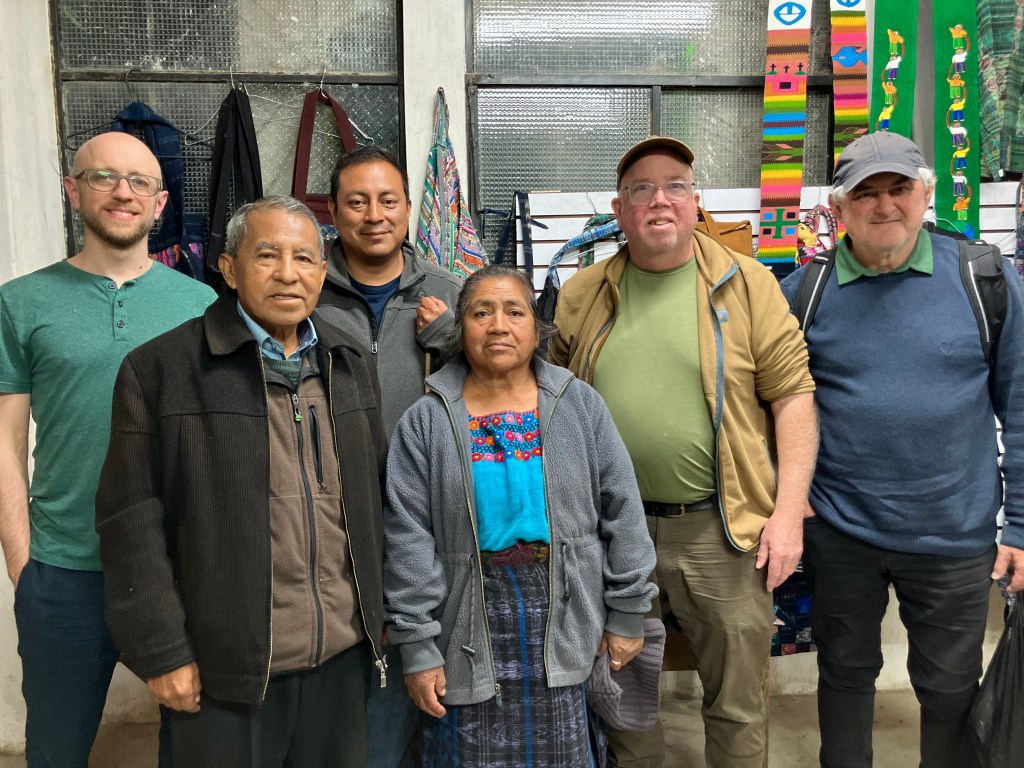
Leaving Guatemala City, we traveled into the highlands, visiting Chichicastenango and the Ruth & Nohemí cooperative, founded by widows of the Guatemalan civil war. Pastor Diego recounted the violence of the early 1980s, when Mayan communities were terrorized, families massacred, and homes destroyed.
Out of profound loss, enduring strength emerged: widows and the pastor organized a cooperative for weaving and sewing, transforming grief into community, dignity, and economic sustenance. Listening to their stories, we were struck by the perseverance of communities shaped by historical trauma.
Ixil Mayan Healing
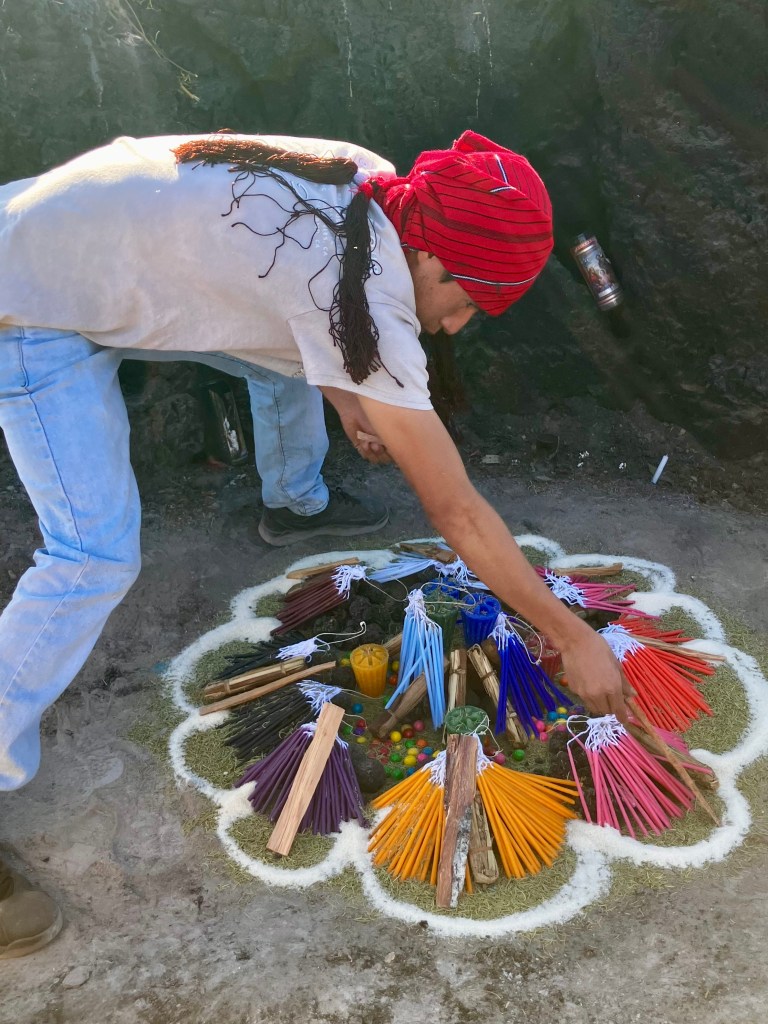
Our next stop was the Ixil Mayan community of Nebaj. There, our hosts, Ana and Pedro, welcomed us into their son’s large but empty home. He left Guatemala at 19 and, now in his early 40s, his remittances help sustain his aging parents and siblings. The home is a quiet testament to his absence—empty, yet full of love and sacrifice.
Knowing that Anton’s wife is undergoing cancer treatment, their eldest son, Cax, arranged a Mayan healing ceremony. We climbed to a sacred site carrying offerings—colored wood shavings, candles, alcohol, flowers, and even small, brightly colored gumballs—and, in a multi-sensory ritual on the mountaintop, asked the ancestors to intercede on Charlotte’s behalf in hope of healing. We were in the presence of vulnerable heroes and wounded healers.
Advocacy and Reflection
We later returned to Guatemala City, where our pilgrimage led us to a press conference ahead of a hearing at the Inter-American Commission on Human Rights. Advocates raised concerns about deportations to third countries and the expansion of U.S. border enforcement.
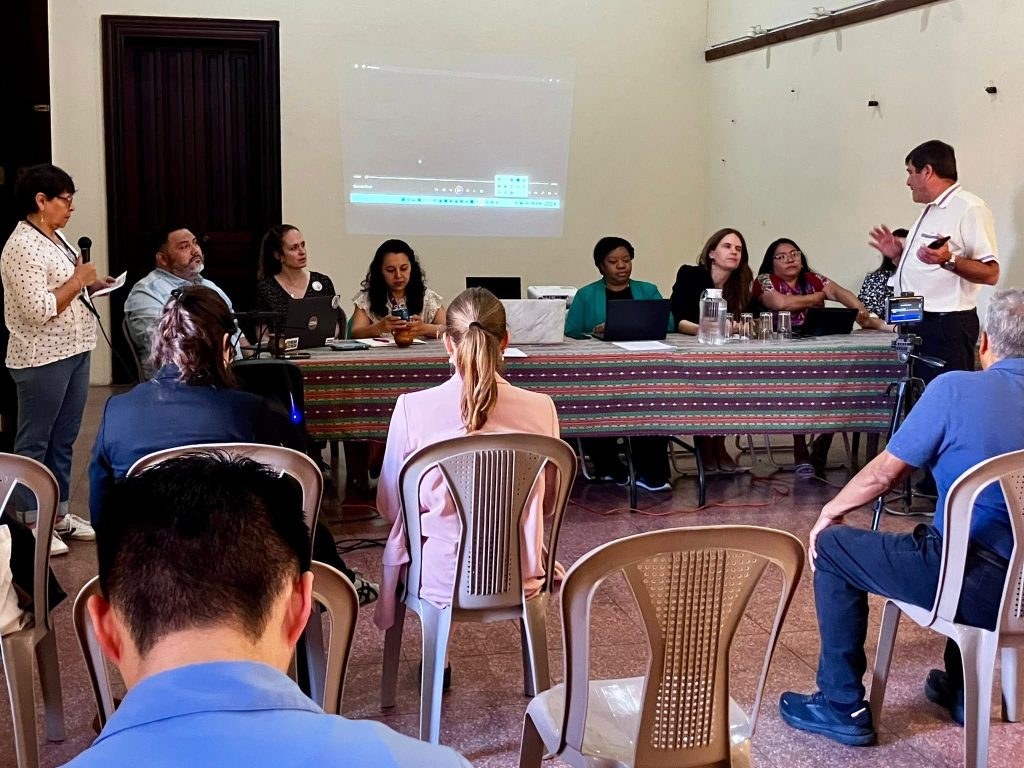
Since January 2025, enforcement capacity has expanded significantly. Guatemala’s agreement to accept roughly 40% more deportation flights reflects an expansion of deportation infrastructure. We heard from Guerline Jozef of the Haitian Bridge Alliance, who spoke about the disproportionate impact on Black migrants. Migration, we were reminded, is not only a humanitarian issue—it is a matter of law, dignity, and equality.
Later in the week, we returned once more to the Air Force landing strip. In a single moment, much of what we had experienced came into focus: a woman who had waited two days, uncertain whether her loved one would return. With our help, she learned he was no longer in ICE custody. Relief and hope filled the air, though their reunion would still come through deportation. Her courage and perseverance underscored why it matters to stand with families in these moments.
Proximity Over Comfort
From the quiet warmth of a family home to the anxious vigil at the airport, from the shelter’s hospitality to the steadfast work of widows’ cooperatives, each step of this journey revealed the enduring power of love, solidarity, and hope.
We return carrying not only stories, but a renewed sense of responsibility: to stand with families, defend human dignity, and work toward a world where no one is treated as expendable. We invite you to stand with this work—by supporting Casa Alterna’s accompaniment of asylum-seeking families, and by undertaking your own border-crossing pilgrimage. This does not require a passport. It can begin in your own community: at a courthouse, a detention center, a bus station, anywhere you can be alongside a newly arrived neighbor. The invitation is the same—to cross the boundaries that keep us distant from one another, and to choose proximity over comfort.
written by Anton, Alberto, and Michael

 Casa Alterna