What if the truest form of resistance is simply to remain tender in a hardened world?
“Love is the work of mirroring and magnifying each other’s light.”
—James Baldwin
There’s a stretch of concrete outside Atlanta’s ICE field office that I’ve come to know by heart. The sun rises there just like anywhere else, but what happens on that sidewalk feels unlike anywhere else I’ve ever stood.
We gather—not as caseworkers or counselors, not as fixers, and certainly not as heroes—but as companions. Compas.
We come with know-your-rights cards, breakfast bars, information about free accommodations, and open hearts. That’s all. And some days, it’s enough. Not to solve the crisis. But to stay human within it.
Some who join us arrive nervous, unsure of what to say or how to help. I remember Mariana—her first day, she hovered close, shadowing me as I moved down the line of families waiting to enter the building. By morning’s end, she had found her own rhythm: quietly translating, gently offering resources, standing in solidarity. That’s how accompaniment begins. Presence begets courage. Solidarity takes root, one tender act at a time.
Emma once helped a Haitian man, Jean, complete a form—simple to some, a labyrinth to him. He tried to pay her. She kindly declined. In that moment, I saw the contrast so clearly: the transactional world we’ve been taught to expect, and the counter-economy we’re trying to create. One not based on earning, but on being. Not on debt, but on dignity.
Cindy, steady and quiet, was greeted by name by our unhoused neighbors. Our volunteers return, week after week, moved by something deeper than duty.
Even the parking lot across the street has become a front in our quiet resistance. Advising newcomers to park a few blocks away—saving over ten dollars—may seem trivial. But when you’re already being bled by a system built on extraction, every dollar matters. Every act of protection—of naming dignity—is resistance.
Alberto—unflinching and kind—stood his ground when the parking lot manager shouted at us. “They may get angry,” he said in his trademark Italian accent, “but at least we tell the truth.”
Still, not every moment is heavy. One morning, a mother and daughter approached the building, visibly tired from their pre-dawn journey. As we began talking, I learned they were from La Libertad, Guatemala—the very town where Charlotte and I once lived for six weeks. It’s a place where Casa Alterna has built deep relationships and collaborative initiatives over the years. The mother, Rosa, smiled with recognition as we named mutual friends. Her daughter, Lucía, attends the school where Charlotte once taught. We snapped a picture to send to her English teacher, Mrs. Aldridge. A flash of grace in a space too often marked by fear.
And sometimes, the needs that meet us at the gates are vast. A couple once approached me, asking for help in returning to their home country. They had tried to self-deport—ICE turned them away. They had nowhere to go. I invited them to the meetinghouse, where they stayed for nearly two weeks. Together with trusted partners, we helped them return home with dignity and respect.
All of this is holy accompaniment. Not directing or rescuing, but walking alongside people. Responding with presence, not performance. Staying close to those who carry both fear and hope.
It’s hard to describe what happens in those hours at the gates of ICE. There are no headlines, no loud declarations. We often don’t feel like we prevail. But there are names remembered, eyes met, tears honored. There is sacred ground underfoot—not because of where we are, but because of how we are.
Outside these gates, we see systems designed to disappear people. But we choose to show up, name them, and stand with them.
Where ICE erases, we remember.
Where bureaucracies dehumanize, we affirm.
Where despair tightens its grip, we offer a soft embrace.
Love crosses borders. And on that sidewalk, morning after morning, we are building something tender and brave—a new world in the shell of the old.
As civil rights activist Vincent Harding reimagined the spiritual “We Are Climbing Jacob’s Ladder,” he reminded us:
We are building up a new world
We are building up a new world
We are building up a new world
Builders must be strong!
At the Threshold
In the midst of hardship and uncertainty, how might you choose to be a companion—offering presence, courage, and love—in your own community?
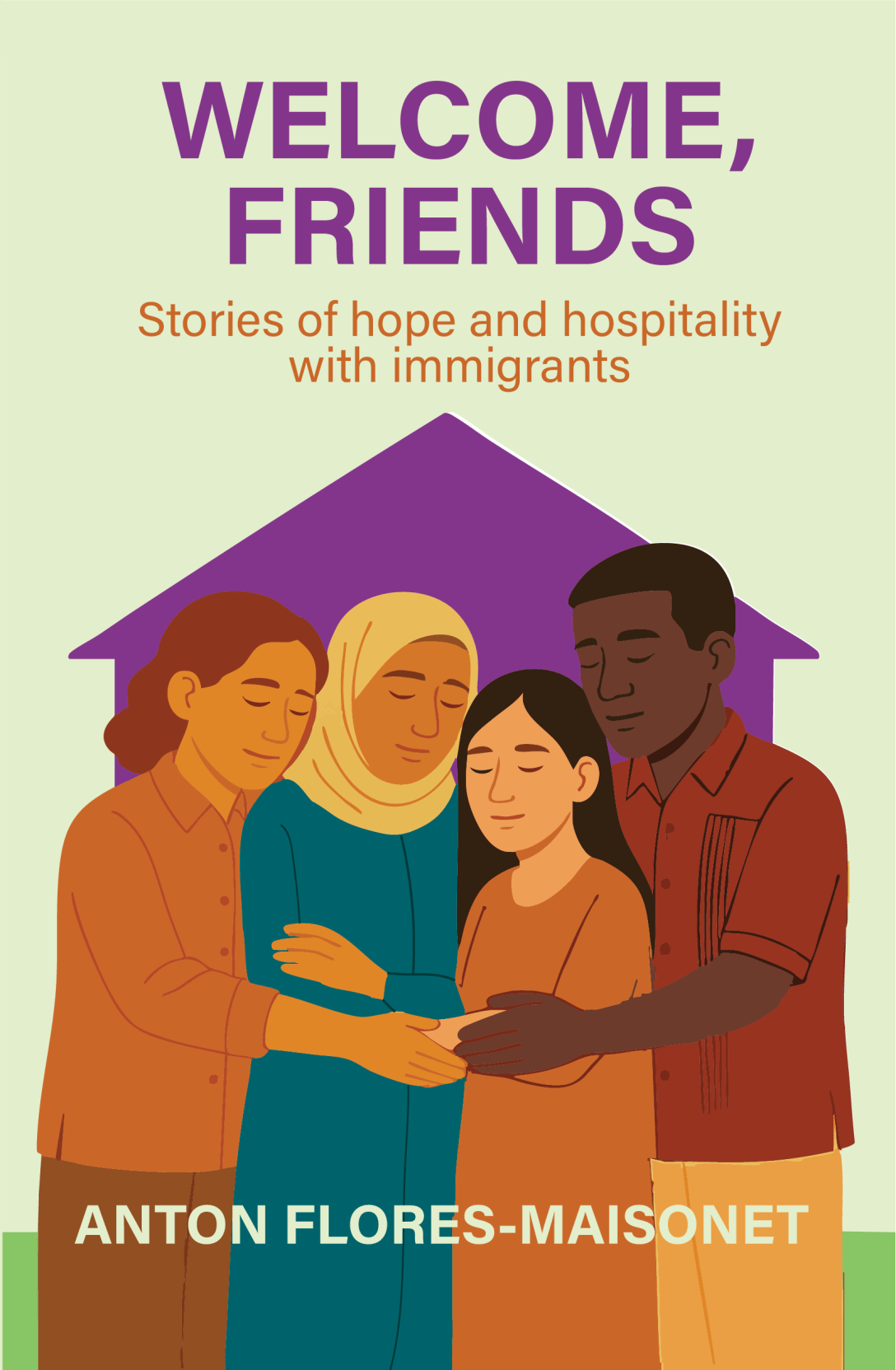
Thank you for reading this excerpt from Welcome, Friends: Stories of Hope and Hospitality with Immigrants. If this story moved you, I invite you to journey deeper into these pages of radical welcome and shared humanity. The book is available for purchase at bit.ly/WelcomeFriendsBook.

 Casa Alterna