In the shadow of 9/11, something shifted in the soul of the nation—and in our sanctuaries. The church I worshiped in, which had always rejected icons and imagery, suddenly raised the American flag above the congregation. No cross. No Christ. Just the Stars and Stripes—hoisted where the cross should have been all along. It was as if our collective grief had been hijacked by nationalism. Empathy gave way to empire.
This is what American exceptionalism does. It doesn’t just glorify the nation; it turns it into a myth. It sanctifies conquest and capitalism, racism and militarism, wrapping them in a civil religion where God begins to resemble Caesar more than Christ. And when that myth is questioned, something dangerous happens: freedom is treated as a threat. We see it in indefinite detention without due process. In the way migration is criminalized. In leaders who exploit fear and scapegoat the vulnerable to maintain their power.
Empires don’t just thrive on power—they depend on forgetting.
Empires don’t just thrive on power—they depend on us forgetting. And this myth is sustained by what we choose not to remember: the genocide of Indigenous peoples, the theft of their lands, the enslaving of Africans under a theology that proclaimed white supremacy as divine order. Historical amnesia is not accidental—it is a privilege of the powerful and a tool of domination.
Every generation has its Pharaohs—those in power who stir up fear to maintain control, often by scapegoating the vulnerable. As told in Exodus, Pharaoh rose to power in Egypt and, fearing the growing presence of a foreign people, turned them into a harshly treated labor force. It was fear disguised as executive order. Policies hardened. And marginalized people were afflicted.
Today, asylum seekers are sent to Guantanamo. Venezuelans deported to El Salvador’s inhumane CECOT prison. Immigrants are detained indefinitely by private corporations that profit from their suffering. This isn’t new—it’s a cruel continuity. From the internment of Japanese Americans to the Muslim ban, America’s history is filled with scapegoats. And always, voices are urging us to forget, to move on, to worship the flag, the gun, the market, and a God who looks suspiciously like a populist strongman.
But another world is possible.
Dr. King called it the Beloved Community—not a utopia but a vision where justice and reconciliation kiss. It is a society where conflict is not erased but transformed, where we remember, repent, reimagine, repair, and rebuild. As King wrote, “The aftermath of nonviolence is the creation of the beloved community, while the aftermath of violence is tragic bitterness.”
This is not passive dreaming. It takes courage. It calls us to challenge myths with truth, to confront fear with love, and to replace isolation with solidarity. At Casa Alterna, where we walk alongside immigrants fleeing violence and poverty, I witness glimpses of the beloved community in resilient individuals offering mutual aid and refusing to be crushed by the system. I see it in families I meet in the two-thirds world during my travels—families who, despite being on the underside of empire, embody joy, hope, and hospitality. I see it in the family and friends of Alma Bowman, who protest at the gates of ICE for her release, and for the redemption of the soul (“alma”) of America. I see it in the teachers who advocate for children standing before immigration judges, alone and vulnerable. And at Casa Alterna, I see it in volunteers who offer open-hearted accompaniment to immigrants, standing with them as they face uncertainty outside the gates of ICE.
The midwives of Exodus refused to comply… That is the invitation before us now.
The rise of illiberalism—of authoritarianism clothed in patriotism—is real. But so is the resistance. The midwives of Exodus didn’t overthrow Pharaoh. They simply refused to comply. They saved lives, quietly and faithfully. That is the invitation before us now.
Migration will continue. Climate collapse and despots will ensure that. But our response need not be fear. It can be welcome. It can be love. It can be prophetic disobedience that exposes false gods and proclaims, even in the face of despair: a world shaped by justice, compassion, and hope is within reach.
And as Gandhi reminded us, “All through history, the way of truth and love has always won. There have been tyrants… and for a time, they seem invincible. But in the end, they always fall. Always.”
The invitation remains: not to bow before empire, but to build the Beloved Community. To remember. To resist. To reimagine. And to love.
written by Anton Flores-Maisonet
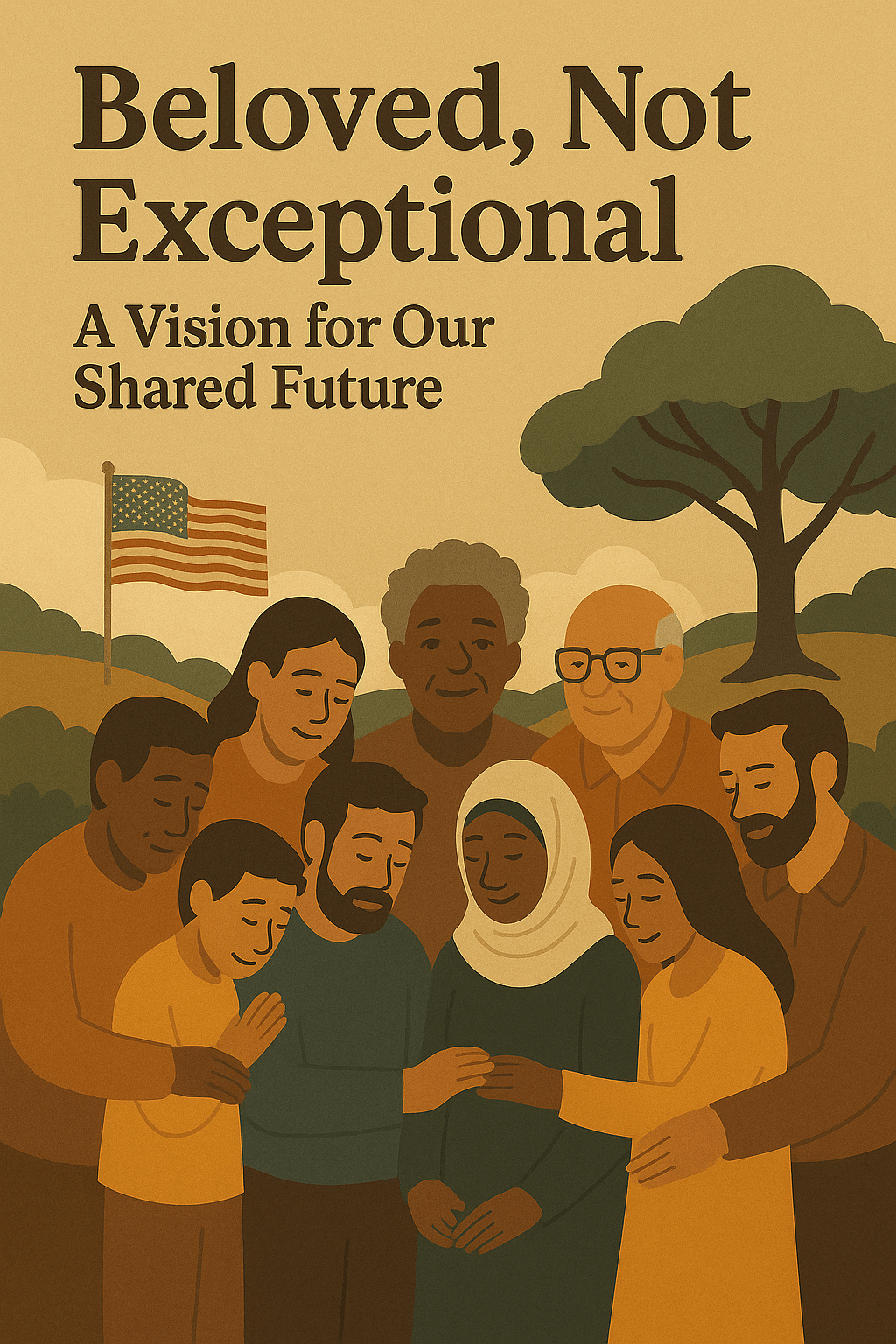
Image created with ChatGPT (OpenAI).

 Casa Alterna